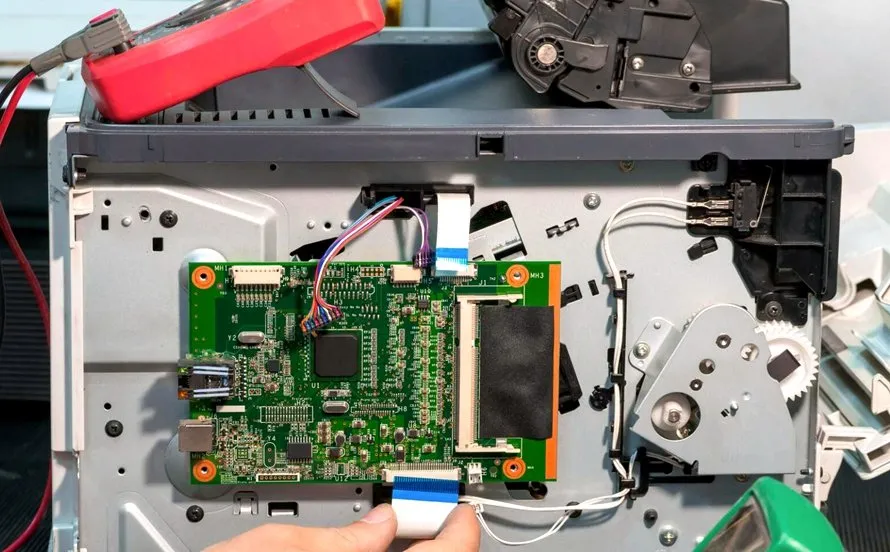
For many OEM companies, a PCB Assembly RFQ is often considered a simple process:
Send the Gerber files and BOM → Receive a quotation.
However, in real electronics manufacturing projects, a professional PCB Assembly RFQ is much more than a request for pricing.
A complete RFQ allows an EMS partner to evaluate:
Manufacturing feasibility
Component availability
Production cost
Testing requirements
Delivery risks
Long-term production stability
An incomplete RFQ may create problems later, such as:
Inaccurate quotations
Unexpected additional costs
Production delays
Difficult supplier communication
Manufacturing risks during mass production
For OEM companies, the purpose of a PCB Assembly RFQ is not only to obtain a price.
It is to provide enough information for an EMS partner to build a reliable manufacturing plan.
A professional EMS supplier should evaluate not only how much it costs to assemble a PCB, but also whether the product can be manufactured consistently and efficiently.
This article explains the key information OEM companies should prepare before sending a PCB Assembly RFQ and why these details matter during prototype development and mass production.
1. Complete PCB Design Files: The Foundation of a PCB Assembly RFQ
The first requirement for any PCB Assembly RFQ is complete manufacturing documentation.
Many OEM companies provide only basic files and expect the EMS supplier to understand the entire project.
However, PCB manufacturing information is usually distributed across different documents.
The most important files include:
Gerber files
BOM
Assembly drawing
Pick and place files
Test requirements
Mechanical information
Each file provides different manufacturing information.
Gerber Files: Define the PCB Manufacturing Requirements
Gerber files provide the information required for PCB fabrication.
Important details include:
PCB layer structure
Board dimensions
Copper thickness
Surface finish
Solder mask requirements
Special PCB requirements
For example, two PCBs with identical dimensions may still have different manufacturing costs because of:
Different layer counts
Different copper thickness
Different surface finishes
Different material requirements
Therefore, a PCB Assembly RFQ without complete Gerber files may result in an inaccurate quotation.
However, Gerber files mainly describe the PCB structure and layout.
They cannot fully explain all assembly requirements, such as:
Component height limitations
Mechanical clearance requirements
Special soldering instructions
Wire assembly requirements
This is why additional manufacturing documents are required.
Assembly Drawing: Define Manufacturing Details That Gerber and BOM Cannot Explain
Gerber files describe the PCB layout.
The BOM describes components.
However, many important manufacturing requirements exist outside these two files.
This is why an assembly drawing is essential.
A good assembly drawing should define:
Component Mechanical Requirements
Examples include:
Maximum component height
Keep-out areas
Connector installation direction
Component orientation requirements
Mechanical clearance requirements
This is especially important for:
Large connectors
Displays
Relays
Electrolytic capacitors
Components close to mechanical structures
A component may be electrically correct but still create assembly problems if the mechanical requirements are not clearly defined.
For example:
A connector installed in the wrong orientation may still pass electrical testing, but it may create problems during:
Cable connection
Enclosure assembly
Final product integration
Coating and Protection Requirements
For products operating in industrial or outdoor environments, many OEM companies require:
Conformal coating
Protective coating
Special cleaning processes
However, simply stating:
“Conformal coating required”
is usually not enough.
The assembly drawing should define:
Coating area
Areas requiring masking
Connector protection requirements
Coating thickness requirements
Without clear instructions, the EMS supplier may follow standard manufacturing assumptions, which may not match the final product requirements.
Post-Solder and Wire Assembly Requirements
For products involving:
Through-hole components
Manual soldering
Wire harnesses
Box build assembly
additional details are required.
Examples:
Lead cutting length
Wire length tolerance
Wire routing method
Cable fixing requirements
Manual soldering instructions
These details directly affect:
Labor time
Assembly cost
Product appearance
Production consistency
For complex products, these requirements should be included before quotation instead of being added after mass production begins.
2. BOM Information: More Than Just a Component List
A Bill of Materials (BOM) is one of the most important documents in a PCB Assembly RFQ.
However, a BOM is not only a purchasing list.
It also represents:
Supply chain risk
Production availability
Cost stability
Long-term product support
A complete BOM should help an EMS supplier understand not only what components are required, but also the potential risks behind those components.
Important BOM information includes:
Manufacturer part number
Component description
Quantity
Approved alternatives
Special requirements
Not Every Component Requires an Exact Manufacturer Selection
A common misunderstanding is that every component must specify an exact manufacturer.
In reality, many standard components can be quoted based on complete technical specifications.
For many standard resistors and capacitors, complete electrical specifications may be sufficient, including:
Resistance or capacitance value
Voltage rating
Package size
Tolerance
Temperature rating
With complete specifications, an EMS supplier can usually select suitable sources while maintaining cost and availability.
However, special requirements must be clearly defined.
Special Component Requirements Must Be Clearly Specified
Some components have requirements beyond basic electrical parameters.
For these components, the BOM should clearly define the expected performance level.
Capacitors
Depending on the application, additional parameters may include:
Dielectric type
Temperature rating
Low ESR requirement
Reliability grade
For example, a capacitor used in a high-temperature industrial controller may require different characteristics compared with a standard consumer electronic product.
If these requirements are not specified, suppliers may select components that meet the basic electrical specifications but do not match the actual application environment.
Resistors
Some applications require more than resistance value and tolerance.
Additional requirements may include:
Power rating
Pulse capability
Temperature coefficient
Current sensing accuracy
For example, a current sensing resistor in a power circuit requires stable performance under continuous load conditions.
A standard resistor with the same resistance value may not provide the same reliability.
3. Prototype Availability Does Not Mean Mass Production Availability
One common mistake during product development is assuming that components available during prototype development will always be available during mass production.
However, prototype sourcing and mass production sourcing are different challenges.
A component may be easy to obtain in small quantities but become difficult to purchase in production volume because of:
Limited inventory
Long lead time
Low production allocation
Minimum order quantity requirements
Therefore, component selection should consider not only prototype requirements but also future production plans.
Real Example: Waterproof Type-C Connector Supply Risk
A customer selected a special Panasonic waterproof Type-C connector during prototype development.
The selection was reasonable because:
The connector had a low-profile design
It supported waterproof requirements
Samples were easy to obtain
However, during mass production preparation, the supply chain review identified a potential issue:
The supplier confirmed a lead time of approximately six weeks for mass production quantities.
The reason was that Panasonic is not primarily known as a connector-focused supplier, and this specific model had limited inventory availability.
If production had continued with the original sourcing plan, the delivery schedule would have been affected.
Fortunately, after supply chain evaluation, a compatible alternative connector was identified.
The final production impact was limited to approximately three days.
This case demonstrates an important principle:
Prototype availability does not guarantee mass production availability.
A professional PCB Assembly RFQ should consider both current sourcing needs and long-term production stability.
4. Production Volume and Forecast: Important Information for Accurate Pricing
A PCB Assembly RFQ should include not only the initial order quantity but also expected production volume.
Important information includes:
Prototype quantity
Initial production quantity
Annual forecast
Expected growth
The same PCB may require completely different manufacturing strategies depending on production volume.
For example:
A 100-piece order may require:
More manual processes
Small quantity component purchasing
Different cost structure
A 50,000-piece annual project may justify:
Better material planning
Process optimization
Production automation
Long-term supply agreements
Without volume information, an EMS supplier cannot accurately evaluate:
Material purchasing strategy
Production capacity requirements
Assembly cost
Long-term manufacturing plan
Production volume also affects sourcing decisions because EMS suppliers may choose different purchasing channels depending on whether the project requires prototype support or long-term mass production.
5. Testing Requirements: PCB Assembly Does Not Equal a Finished Product
Testing requirements are one of the most frequently underestimated parts of a PCB Assembly RFQ.
function testing
Many RFQs only mention:
“PCB Assembly required.”
However, they do not define:
Programming requirements
Functional testing
Calibration
Test data recording
Special validation requirements
Some customers assume:
“If all components are qualified and soldering quality is good, the product should work.”
However, PCB assembly quality alone does not guarantee final product functionality.
A PCBA may still fail because of:
Firmware-related issues
Circuit interaction problems
Incorrect parameters
Assembly mistakes
Functional requirements not being verified
OEM Companies Should Define Testing Requirements Early
Some customers understand that testing is important but avoid mentioning it because they are concerned about:
Additional cost
Longer production time
More manufacturing complexity
However, hiding testing requirements does not reduce risk.
It only moves the risk to a later stage.
For example:
A factory functional test may verify that:
“The PCB operates correctly under defined test conditions.”
But the final product may require additional validation, such as:
Communication stability
Sensor accuracy
Load response
Protection function verification
These are different validation objectives.
OEM companies should clearly define:
What functions need verification
What parameters need measurement
What acceptance criteria are required
An EMS partner can provide manufacturing suggestions, but the final product validation requirements should come from the product owner.
6. Manufacturing Timeline: Why OEM Companies Should Provide Expected Delivery Requirements
Expected timeline is another important but often overlooked part of a PCB Assembly RFQ.
Many OEM companies leave the delivery requirement empty and expect EMS suppliers to compete based on the shortest possible lead time.
However, this approach may create unnecessary problems.
A manufacturing schedule is not only determined by assembly capacity.
It is also affected by:
Component sourcing strategy
Supplier selection
Inventory availability
Production planning
Testing requirements
Without a clear timeline requirement, an EMS supplier usually follows the most cost-effective sourcing approach:
Purchase components through standard channels, prioritize original manufacturers, and optimize for long-term cost.
This is usually the best option for stable mass production.
However, if the project requires:
Fast prototype delivery
Urgent production ramp-up
Short market launch timeline
the sourcing strategy may need to change.
For example:
The EMS supplier may need to consider:
Authorized distributor inventory
Alternative approved components
Different purchasing channels
Higher-cost but faster supply options
These decisions directly affect the final quotation.
Delivery Requirements Help EMS Suppliers Build the Right Supply Chain Strategy
A common misunderstanding is:
“Let suppliers compete first, then decide the delivery time later.”
However, this may create unrealistic expectations.
A more effective approach is for OEM companies to clearly communicate:
Prototype deadline
Mass production start date
Expected annual demand
Market launch schedule
With this information, an EMS supplier can evaluate:
Whether standard sourcing is acceptable
Whether alternative components are needed
Whether inventory planning is required
Whether production capacity should be reserved
The earlier these factors are considered, the lower the risk of unexpected delays.
7. Mechanical and Final Product Information: PCB Assembly Is Often Part of a Larger System
Many PCB Assembly RFQs focus only on the PCB itself.
However, in real products, the PCBA is usually integrated with:
Enclosures
Displays
Batteries
Cable assemblies
Sensors
Mechanical structures
Without understanding the final product environment, an EMS supplier may miss important manufacturing requirements.
Why Mechanical Information Matters During PCB Assembly
A PCB can pass electrical testing but still fail during final assembly.
Examples include:
Connector position does not match enclosure opening
Component height interferes with mechanical parts
Cable length is insufficient for assembly
Components are located in restricted areas
These issues are much easier to solve during the quotation and engineering review stage than after mass production begins.
For projects involving:
Box build assembly
Cable integration
Final product assembly
mechanical information should be included as early as possible.
8. What a Professional PCB Assembly RFQ Should Include
A complete PCB Assembly RFQ should provide enough information for an EMS supplier to evaluate both manufacturing cost and production risk.
A recommended RFQ package includes:
PCB Information
Gerber files
PCB specifications
PCB revision
Layer information
Surface finish requirements
Assembly Information
BOM
Assembly drawing
Pick and place files
Special process requirements
Component Information
Manufacturer part numbers
Approved alternatives
Special reliability requirements
Supply constraints
Production Information
Prototype quantity
Mass production quantity
Annual forecast
Expected delivery schedule
Testing Information
Functional test requirements
Programming requirements
Calibration requirements
Test data requirements
Product Information
Application environment
Mechanical requirements
Final assembly requirements
Providing complete information does not only improve quotation accuracy.
It also allows the EMS partner to identify potential risks before production begins.
How FUMAX Supports OEM Companies During PCB Assembly RFQ Evaluation
At FUMAX, we believe a PCB Assembly RFQ is not simply a pricing request.
It is the starting point for manufacturing planning.
Our team reviews RFQ information from multiple perspectives:
Manufacturing feasibility
Component availability
Assembly requirements
Testing needs
Production risks
During evaluation, we help customers identify potential issues related to:
Difficult-to-source components
Manufacturing complexity
Testing gaps
Assembly requirements
Supply chain risks
Our goal is not only to provide a quotation, but also to support a smoother transition from prototype development to stable mass production.
FUMAX provides OEM customers with:
PCB assembly services
Component sourcing support
Manufacturing process management
Testing support
Box build integration
By preparing a complete PCB Assembly RFQ and working with an experienced EMS partner, OEM companies can reduce manufacturing uncertainty and build more reliable products.
Conclusion
A successful PCB Assembly RFQ is not about sending a BOM and waiting for a price.
The quality of the RFQ directly affects:
Quotation accuracy
Manufacturing feasibility
Production stability
Long-term supply chain performance
OEM companies should prepare:
Complete PCB documentation
Clear component requirements
Realistic production forecasts
Defined testing requirements
Expected delivery schedules
Final product information
The earlier these factors are considered, the easier it becomes to avoid unexpected costs, delays, and manufacturing problems.
A reliable EMS partner does not only assemble PCBs.
A professional manufacturing partner helps OEM companies transform engineering designs into stable, scalable production.